
Three wild clay samples from different locations – Randsfjorden (Norway), Louns (Denmark), and Næsby (Denmark) – were collected and raw-fired at 980 °C. The results were strikingly varied: one came out like classic terracotta, dense and solid; another turned out light as a biscuit, very porous and fragile; the third fired to a reddish, firm piece with moderate porosity. These differences illustrate how local geology and soil composition (iron content, lime traces, natural sand, etc.) can dramatically affect a clay’s fired color, strength, and porosity. Below, we detail each sample’s characteristics and explore the likely causes behind them, in an accessible way for design researchers, ceramicists, and curious followers alike.
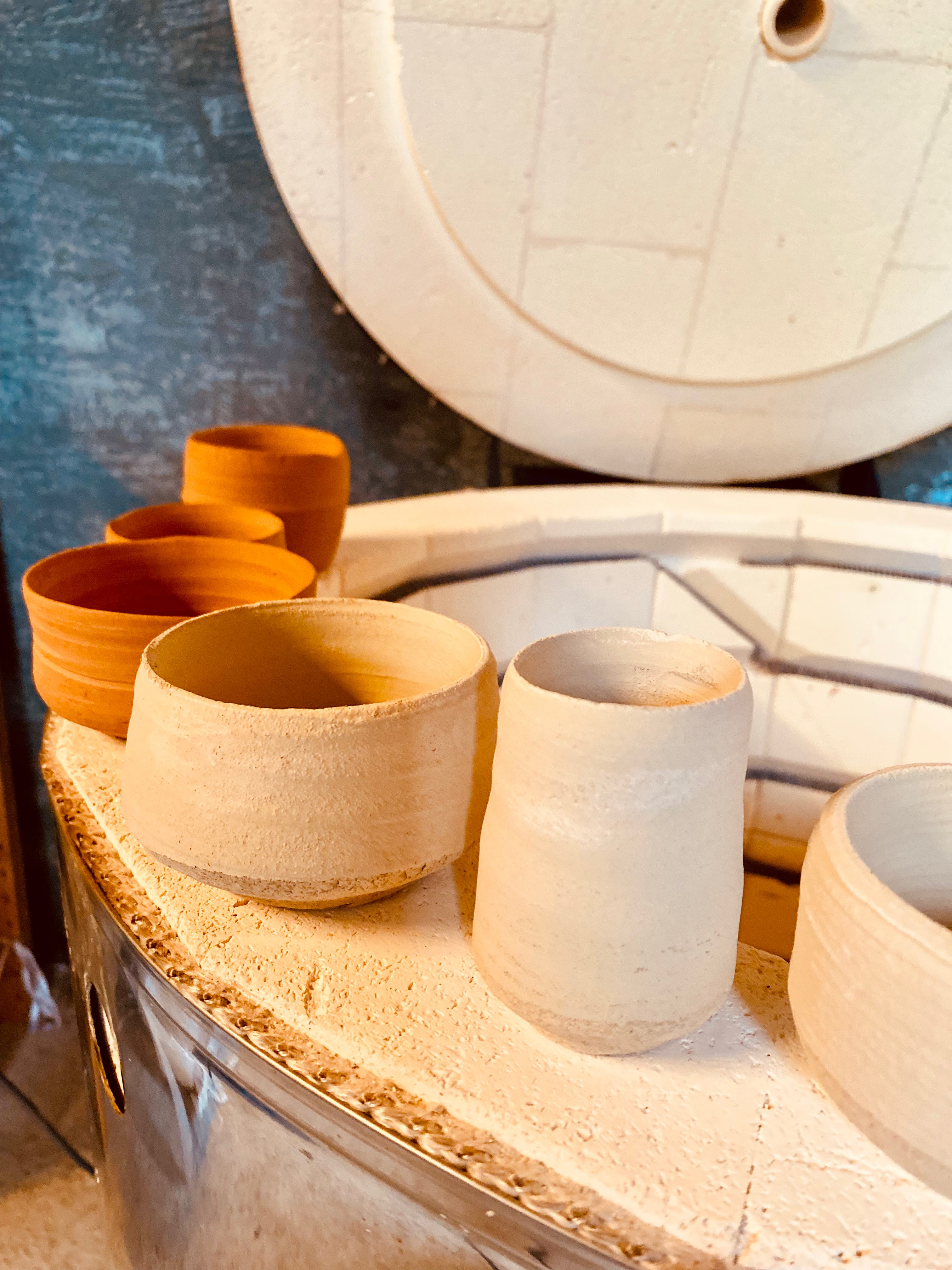
Randsfjorden (Norway) – Terracotta-Like and Dense
After firing, the Randsfjorden clay emerged with a terracotta-like color and a notably dense, solid body. It has the warm orange-red hue one expects of terracotta earthenware, and the piece feels heavy and rock-like in the hand. If tapped, it gives a satisfying, solid sound – a sign of low porosity. Visually, its surface is relatively smooth with no obvious holes or grit. This little Norwegian sample could almost be mistaken for a manufactured terra cotta tile or pot shard given how robust it is.
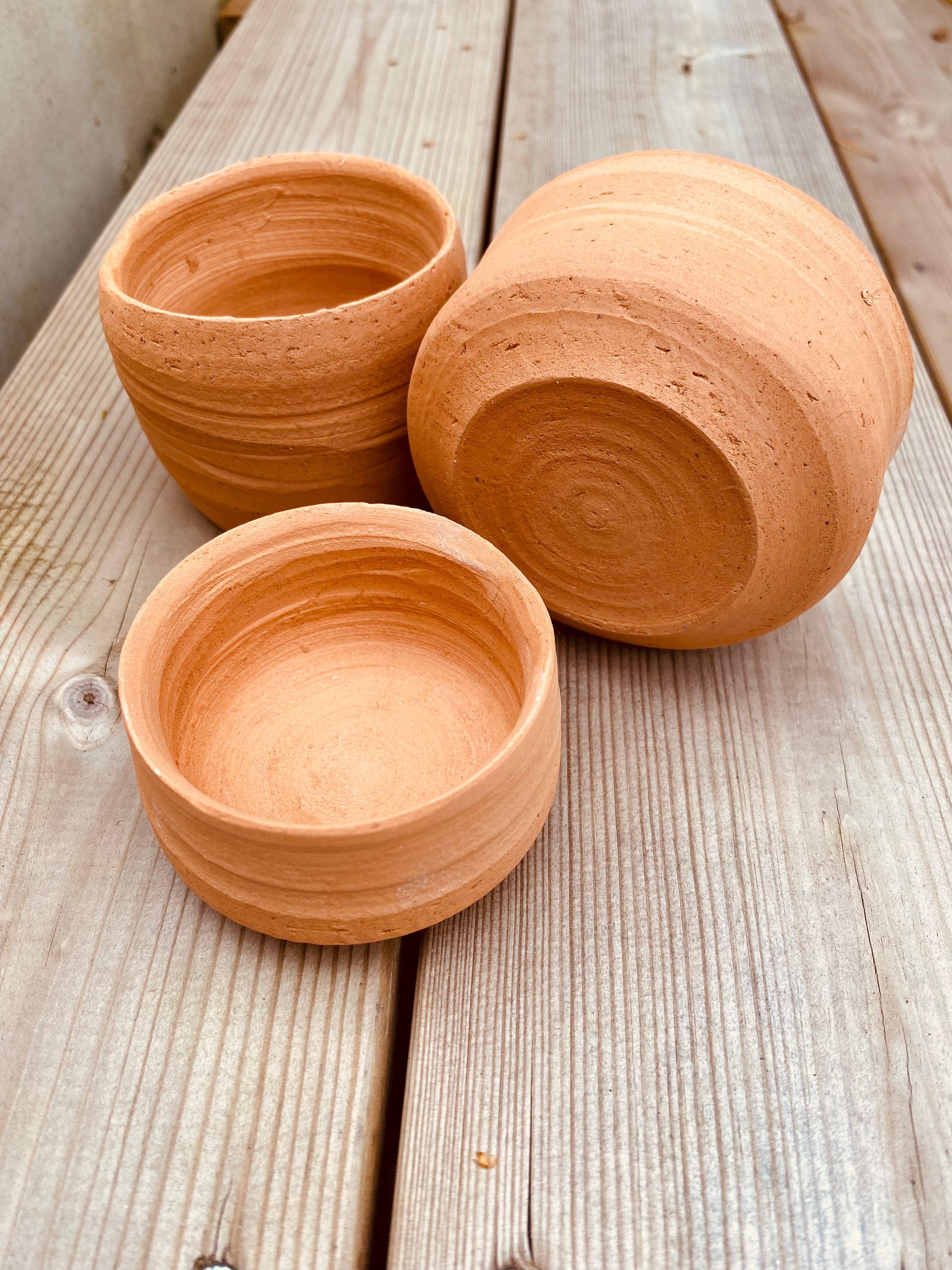
What’s behind this density and color? A key factor is iron content in the clay. Iron minerals in the Randsfjorden soil acted as natural colorants during firing – in oxidizing conditions, iron oxide imparts that classic red-orange terracotta tone . (Typically ~5% or more iron in a clay body will yield a rich red color when fired at earthenware temperatures .) The clay’s vivid color suggests it’s low in lime (calcium carbonate), since clays with high lime (“calcareous” clays) tend to fire more yellow or buff instead of red . Geologically, this makes sense: Randsfjorden’s clay likely formed from glacial lake sediments or ground-up crystalline rock, which are often rich in iron-bearing minerals but contain little chalk or limestone.
Another factor is how well the clay sintered (fused) at 980 °C. The Randsfjorden clay must have a composition that allowed it to vitrify to a degree even at this relatively low firing temperature. Perhaps it has a high fraction of fine clay particles and naturally occurring fluxes (like certain alkali or iron compounds) that started melting and binding the clay particles together into a tight matrix. The result is low porosity and high strength – the shard feels very hard and does not absorb water easily. In practical terms, this Norwegian clay turned into a solid piece of earthenware: dense, durable, and with that beautiful terracotta warmth. It’s a great example of how a rich iron, low-lime clay can fire to a strong, non-porous ceramic at around 980 °C.
Louns (Denmark) – Light, Porous, and Fragile
In stark contrast, the Louns clay fired into a light and porous piece. This sample was tempered with quartz sand (meaning sand was mixed into the clay before firing), and it shows: the fired piece is pale in color, very lightweight, and full of tiny voids. You can see and feel the gritty texture – grains of quartz pepper the surface. The color is much lighter (pale tan or faint orange), lacking the deep terracotta redness. When handling the piece, one must do so carefully; it feels delicate, and a firm press or drop could crumble it. In essence, it’s like a biscuit or meringue version of fired clay – airy and brittle.
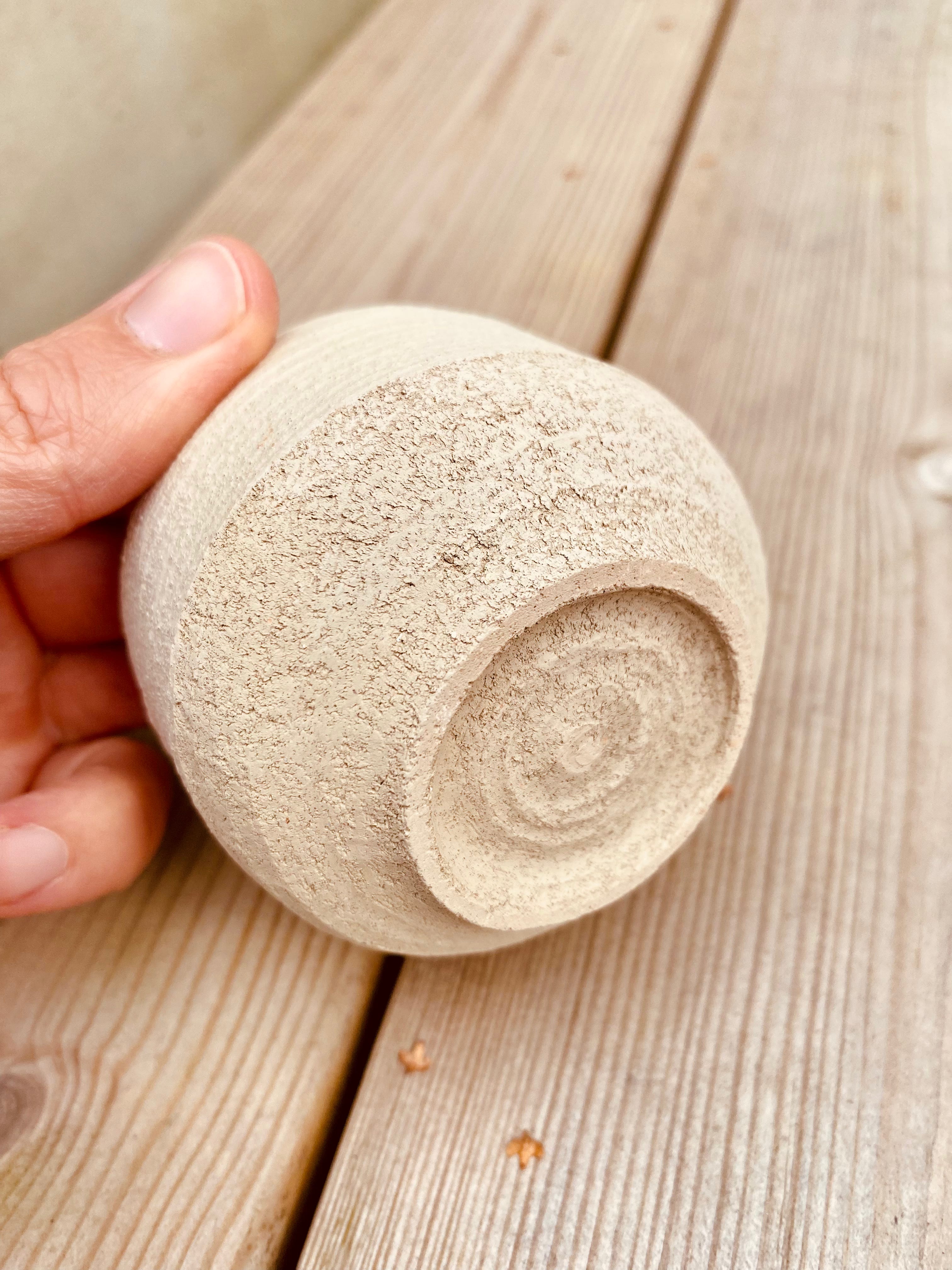
Why so porous and perhaps weak? The main reason is the high quartz sand content. Quartz (silica) has a very high melting point, so at 980 °C the sand grains remain essentially unmelted. Instead of fusing, the sand particles act as an inert filler separating the clay particles. This greatly reduces the clay’s ability to sinter into a solid mass, yielding a low-density, high-porosity body. In fact, experiments show that adding a lot of sand to a clay body lowers its densification and strength – beyond small percentages (>5% sand), the fired strength drops significantly because the clay can’t bind all that extra grit. My Louns sample likely had quite a hefty dose of quartz temper, resulting in an open, porous structure (you might imagine myriad little air gaps where clay shrank away from each sand grain during firing). This explains why it feels “light as pumice” and can be broken with little force.
Compositionally, the Louns clay itself might also differ from the Norwegian clay. The lighter color hints at either lower iron content or perhaps the presence of some lime (calcium) in the soil. Danish clays, especially in areas like Louns, can derive from glacial and marine deposits that include ground shells or chalk from limestone bedrock. Even a modest amount of lime in clay tends to burn out to a buff or creamy color rather than red – which could be contributing to this sample’s paler hue. It’s possible the Louns clay naturally contains less iron and a bit of calcareous material, giving it a yellowish or off-white fired tone instead of brick-red.
Historically, potters often tempered very plastic clays with sand to prevent cracking and reduce shrinkage. In my case, the added sand did stabilise the clay during drying/firing (the piece survived the firing intact), but at the cost of strength. The porosity is so high that this shard would readily soak up water like a sponge. For design researchers and ceramic enthusiasts, the Louns sample is a vivid reminder that more isn’t always better with temper – a clay heavily diluted with sand simply can’t knit itself together in the kiln. The result is an ultra-light, porous ceramic that highlights how natural sand content (or added temper) can leave a fired clay weak and powdery if the firing temperature isn’t high enough to flux those silica particles into the melt.
Næsby (Denmark) – Reddish and Firm, with Moderate Porosity
The Næsby clay sample fired to a warm reddish color and came out firm and sturdy, yet it is more porous than the Norwegian clay. In appearance, it sits between the other two: it has a definite red-orange tint (darker than the Louns piece, thanks to more iron, but perhaps a bit lighter or more brownish than the Randsfjorden terracotta). The surface feels solid to the touch and the piece doesn’t crumble – it’s far more robust than the Louns sample. However, if you compare it side-by-side with the Randsfjorden piece, the Næsby clay is a touch lighter in weight and you might notice a slightly more open granular texture on broken edges, indicating tiny pores within. It’s firm but not as densely sintered as the Norwegian clay.
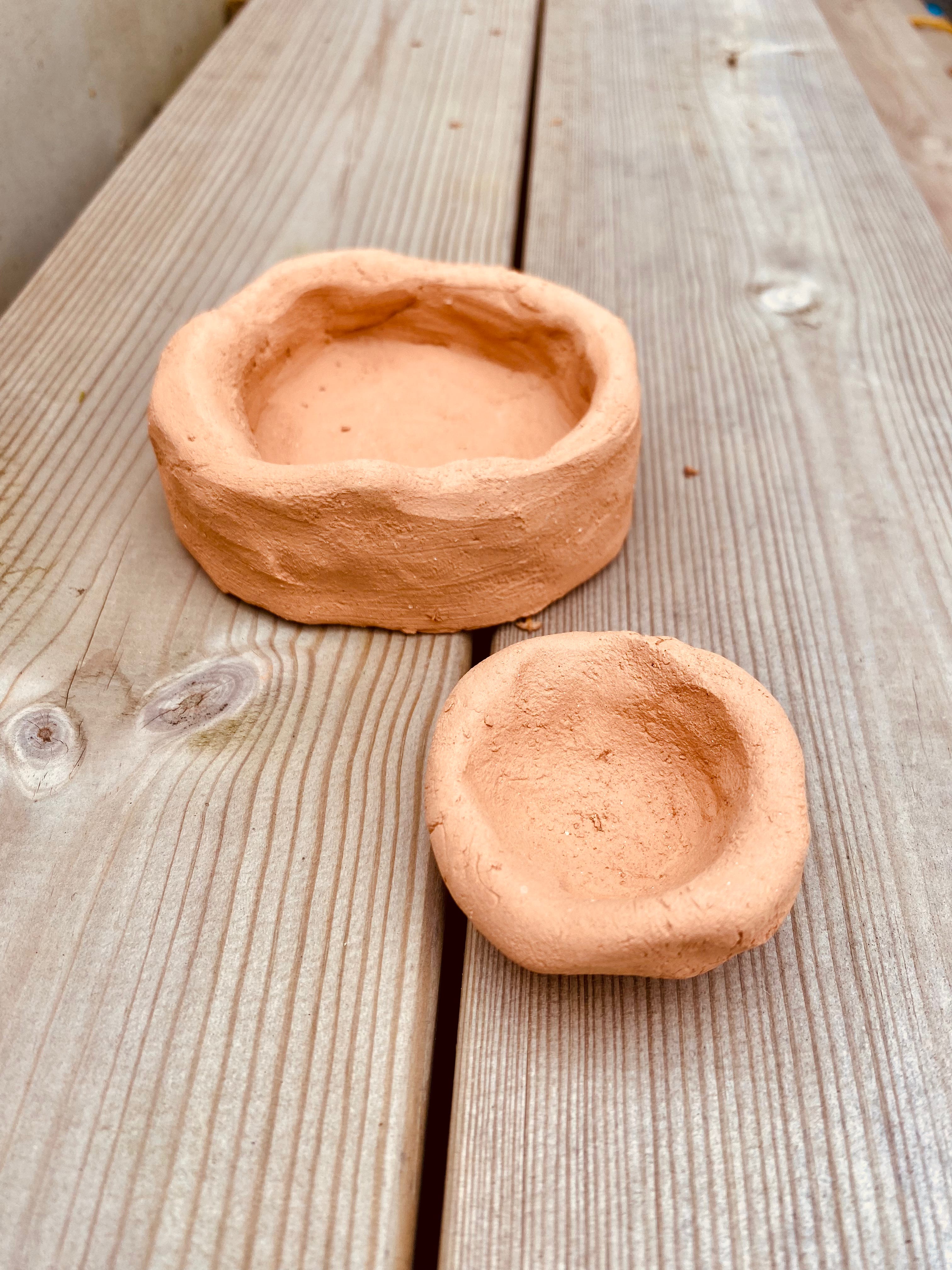
Geology & chemistry in play: The reddish hue tells me this clay also contains a healthy amount of iron oxide (which fires red in oxidized earthenware). Unlike the Louns clay, the Næsby sample wasn’t heavily tempered with added sand. I was used in a relatively pure form. Even so, the clay could naturally include some sandy or silty particles from its environment (for instance, glacial till often mixes clay with fine sand). These inert particles would similarly limit densification, leaving the fired body with more micro-pores. Additionally, if the Næsby clay has any slight calcium content (from geological sources common in Denmark), that could influence its firing behavior. Calcareous components begin to react around our firing range, but since the piece is still red-hued, the lime content is probably low (higher lime could have muted the red to a straw-yellow?). Still, even a small amount of calcium in the clay can act as a filler at this temperature (because lime likely does not become a strong flux until much hotter), potentially contributing to porosity. In plainer terms: Næsby’s clay had enough iron to go red, but perhaps not the optimal mix of fluxes to fully vitrify at 980 °C, resulting in a semi-vitrified, somewhat porous ceramic.
In practice, the Næsby piece feels like a decent earthenware: hard and serviceable (it would make a usable pot at this stage), yet it will still absorb water due to its porosity. Its strength is intermediate – you could handle or even drop it from a low height without it shattering, but it’s not as unyielding as the Randsfjorden sample. This difference underlines how a balance of ingredients in the clay (clay minerals vs. sand, iron, lime, etc.) affects the final outcome. Næsby clay, coming from Danish soil, probably had a bit more natural grit and perhaps less of the fine, flux-rich clay fraction compared to the Norwegian clay. That is likely why it did not fuse quite as densely, even though it shares the iron-driven red colour trait. It is a firm, reddish earthenware with a touch more “breathability” (porosity), illustrating a middle ground between the extremes of Randsfjorden and Louns samples.